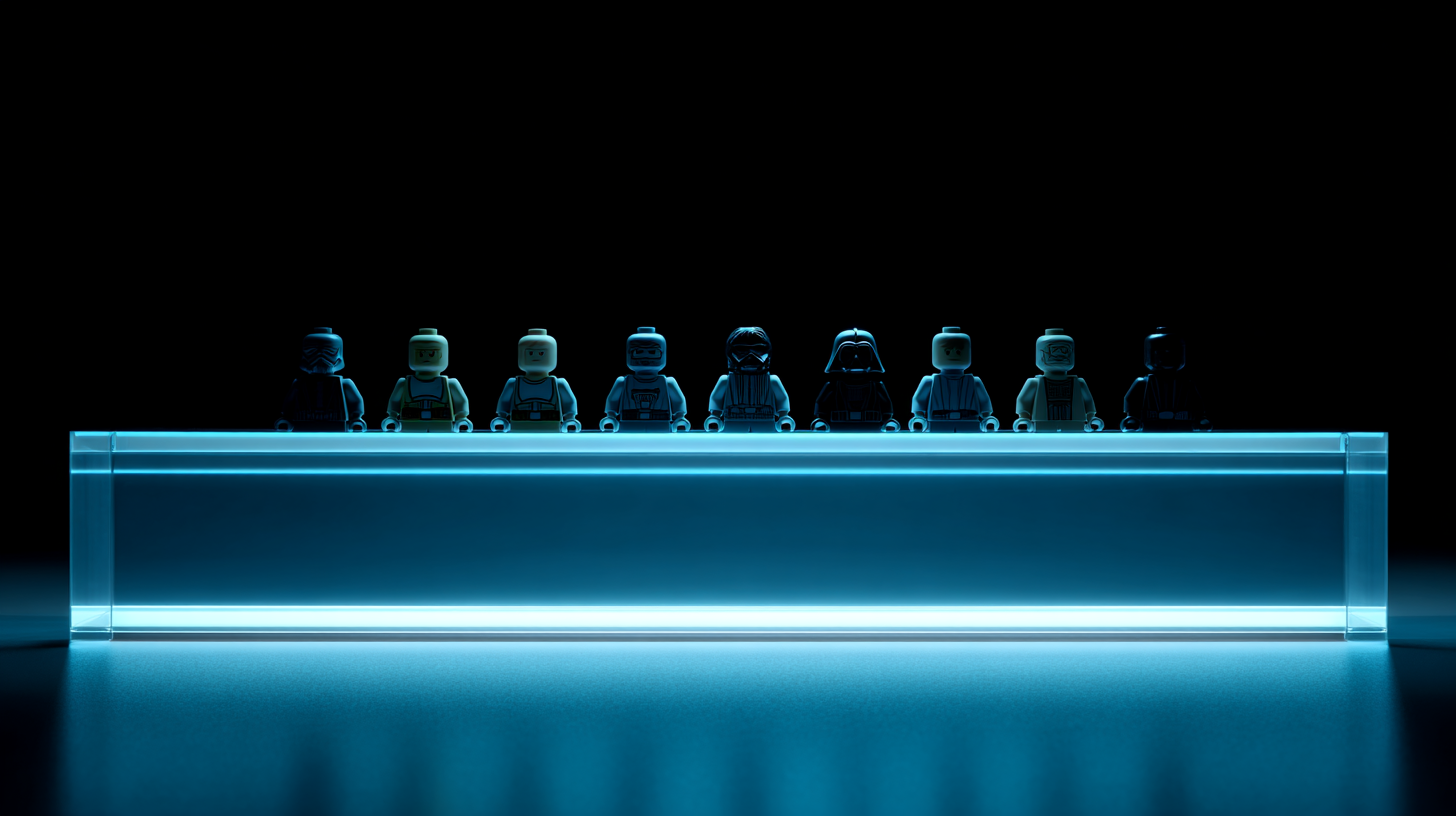
Blank space on a shelf is a crime against the galaxy, yet many collectors still scatter figures across random bookcases. Today we’re fixing that. These star wars minifigs display tips come from years of trial, a few accidents with gravity, and an obsessive need to tell the complete story in one tidy view. The goal is to turn a single shelf into a mini museum that flows from Republic to Resistance without clutter or chaos.
Start with a clear narrative line
A great shelf reads like a timeline. Begin on the left with Old Republic legends, march through Clone Wars turmoil, glide into the Imperial era, and end on whatever fresh saga you follow now. This left-to-right flow matters because casual viewers skim displays the same way they read a page. Place your Clone Trooper minifigs at the first breakpoint so their crisp white armor signals the start of organized armies. A link if you need reinforcements: Clone Trooper minifigs.
After troopers come robed peacekeepers, then masked tyrants, then scrappy rebels. Ending the parade with modern armored warriors lets the eye rest on glossy helmet visors that reflect ambient light like tiny spotlights.
Group by era first, specialty second
Collectors love rows by rank, but rank alone can muddle eras. Instead, stack time periods then subdivide within each block. For example:
-
Clone Wars block
-
Front row: standard infantry
-
Middle row: field commanders
-
Back riser: elite corps
-
-
Galactic Civil War block
-
Front row: pilots
-
Middle row: saboteurs
-
Back riser: regal officers
-
This structure keeps background colors harmonious. Phase-II helmets share a palette that contrasts beautifully with bright orange flight suits further along the shelf.
Our earlier post, Budget Star Wars Minifig Gap Fillers, dives deeper into mixing army builders with scene-stealers without breaking the bank.
Use risers and acrylic steps to balance height
Minifigs are equal in stature, but their accessories are not. Jet-pack torsos and heavy backpacks add vertical drama. To stop tall gear from hiding shorter droids, use two-level acrylic risers. Place the lightest units on top so shelves don’t sag. Cheap nail-polish stands work in a pinch; clear LEGO bricks under baseplates do too.
Stagger the back row by half a stud to avoid helmet collisions. Small offset blocks double as extra support when temps shift and plastic contracts.
Let planets set the color rhythm
Shelves look sharp when each planet’s soil tint matches the background. Lay a strip of tan craft paper under desert troops, ash-grey felt under lava operations, and deep forest green under guerilla fighters. The surface color frames feet, making squads pop without heavy diorama builds.
Snap pictures of the lineup and view them in black-and-white mode. If every era still reads apart, you nailed the tonal contrast.
Spotlight key duels rather than every duel
A shelf can’t host 20 face-offs. Pick three turning points only. Place each skirmish dead center of its era block, leaving open lanes on either side so blades and blasters don’t clip helmets next door. Tilt the two opponents three degrees inward so their focus locks visually. That micro-angle whispers motion more than a static straight line.
Integrate droids as connectors
Astromechs and protocol units belong everywhere. Use them to bridge timeline gaps the way a narrator bridges chapters. A droid rolling between Clone commanders and Imperial officers eases the jump from bright armor to dark uniforms. The silver sheen of mechanical casings also catches LED strips, bouncing light forward.
Readers of our review on souped-up sabers, Custom Minifigs Every Star Collector Should Know About, already saw how chrome elements steal attention. The trick applies just as well to display flow.
Achieve depth without dust magnets
Glass-door detolfs solve dust, but many fans use open shelving. If that’s you, rotate figs monthly. While cleaning, swap one or two minor characters with fresh troopers so the lineup evolves even if new waves are slow to ship.
Recharge variety by ordering small booster packs once a quarter. I get mine from minifig.biz. Quick shipping keeps the momentum rolling and costs less than a new light-up saber stand.
Lighting that flatters plastic
Skip multicolor LEDs. Warm white strips render red tunics and flesh tones more faithfully. Stick the strip to the back wall of the shelf, facing forward, so helmets cast minimal shadows. If glare still hits visor pieces, slide a slip of parchment paper over the LED to diffuse hot spots.
Label discreetly
Tiny black nameplates blend with acrylic risers yet help guests read the saga. Keep fonts under 10-point so the labels serve collectors, not distract. Magnetic tape on the underside lets you slide names when you reorganize.
Resist clutter creep
The final, hardest tip: stop yourself from pushing random merch into minifig space. Keychains, pins, and coasters dilute the story. Give them their own shelf below. Your minifigs earned center stage—let them have it.
Bringing it all together
With these star wars minifigs display tips in play, one shelf can carry three decades of galactic turmoil without feeling like a flea market stall. Choose a story order, lift rows with clear plastic, let planet colors guide ground cover, and inject fresh recruits every few months. Visitors will track the saga at a glance and, more important, you will smile every time you pass by.
Happy arranging, and may your studs stay dust free.